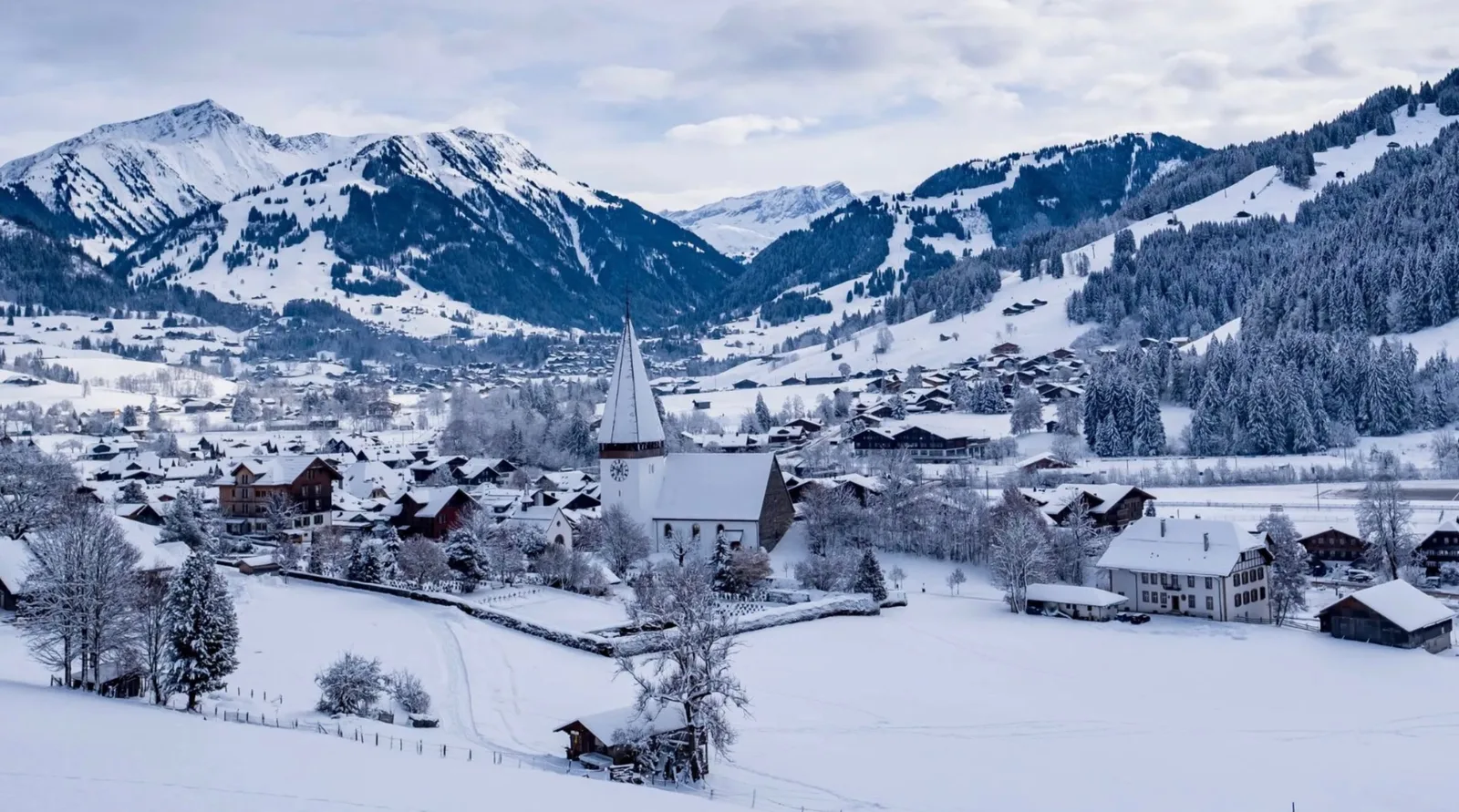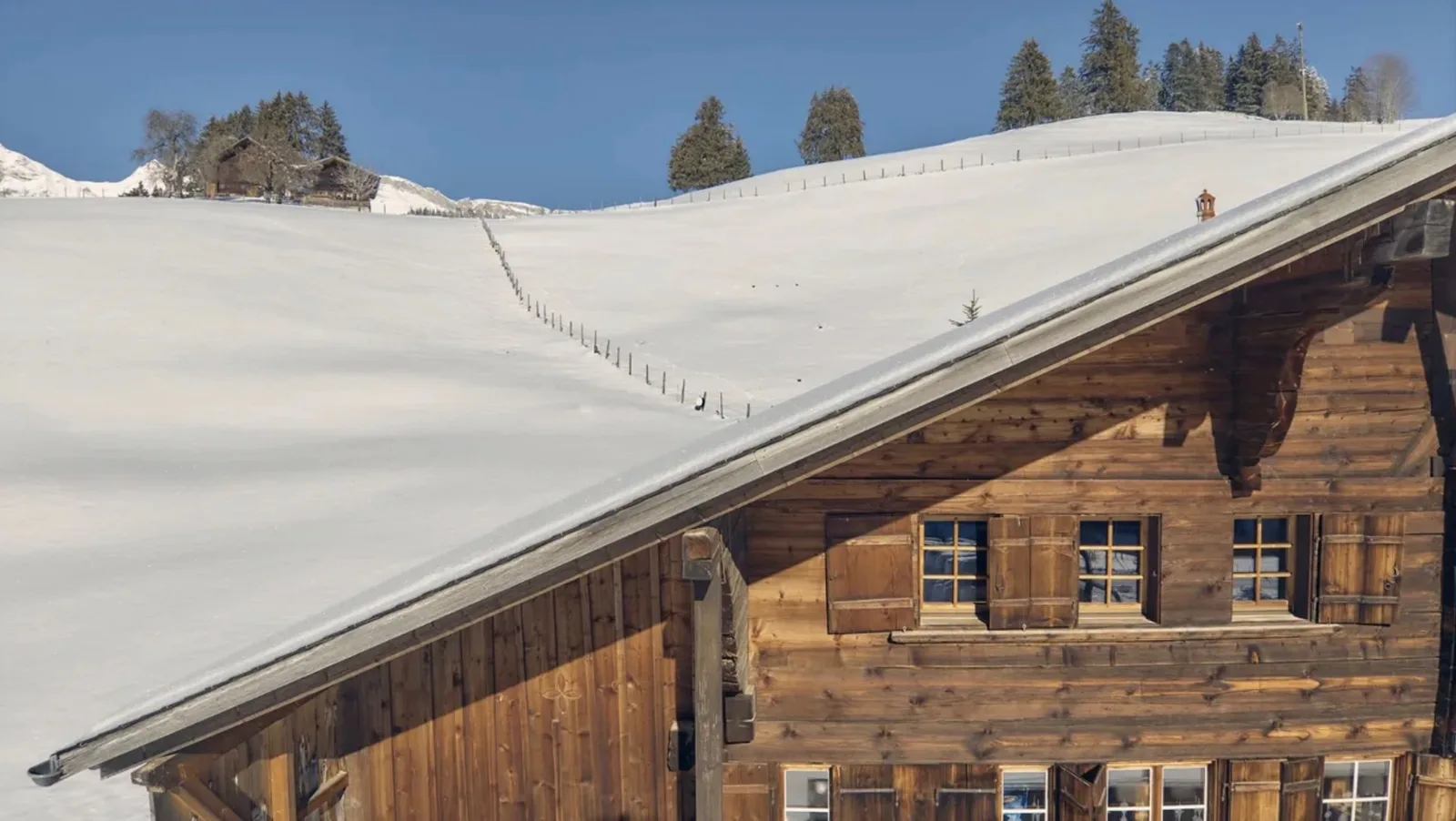
Walk slowly through any village in the Saanenland and you will notice that the houses are speaking to you. Beneath the deep eaves, carved into the great horizontal beam that runs across the façade, are lines of lettering: names, dates, sometimes a prayer. Most visitors pass beneath them without looking up. Those who do discover that a Gstaad chalet is not merely a building. It is a document, and it has been waiting, sometimes for two or three centuries, to be read.
The Signature in the Wood
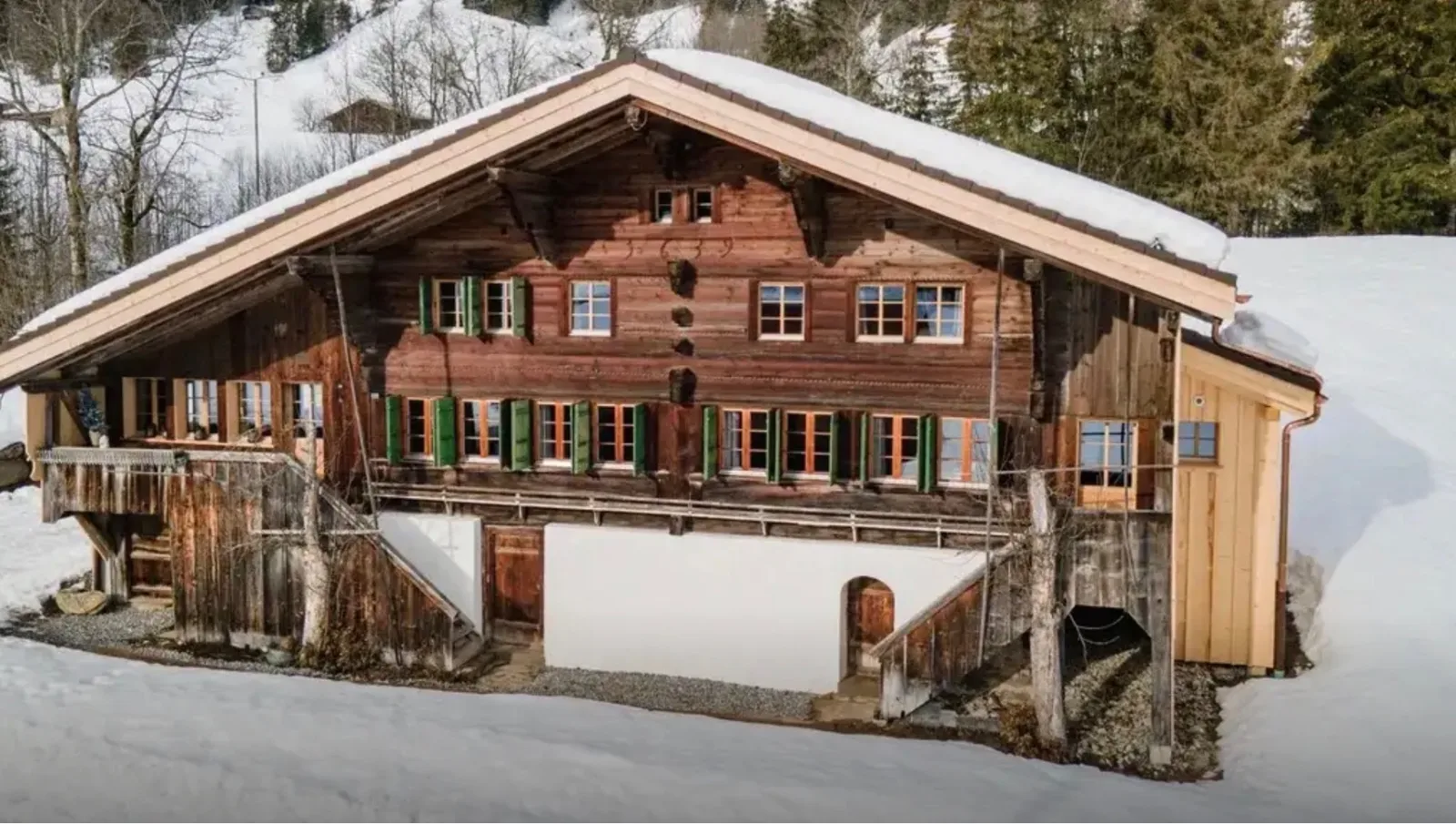
In the Bernese Oberland, it was long the custom for a chalet to bear its own history on its face. The inscription usually named the family who commissioned the house and the master carpenter who built it, and recorded the year the roof was raised. Often it closed with a verse asking for protection from fire, storm and misfortune, for in a valley of timber houses those were not abstract fears.
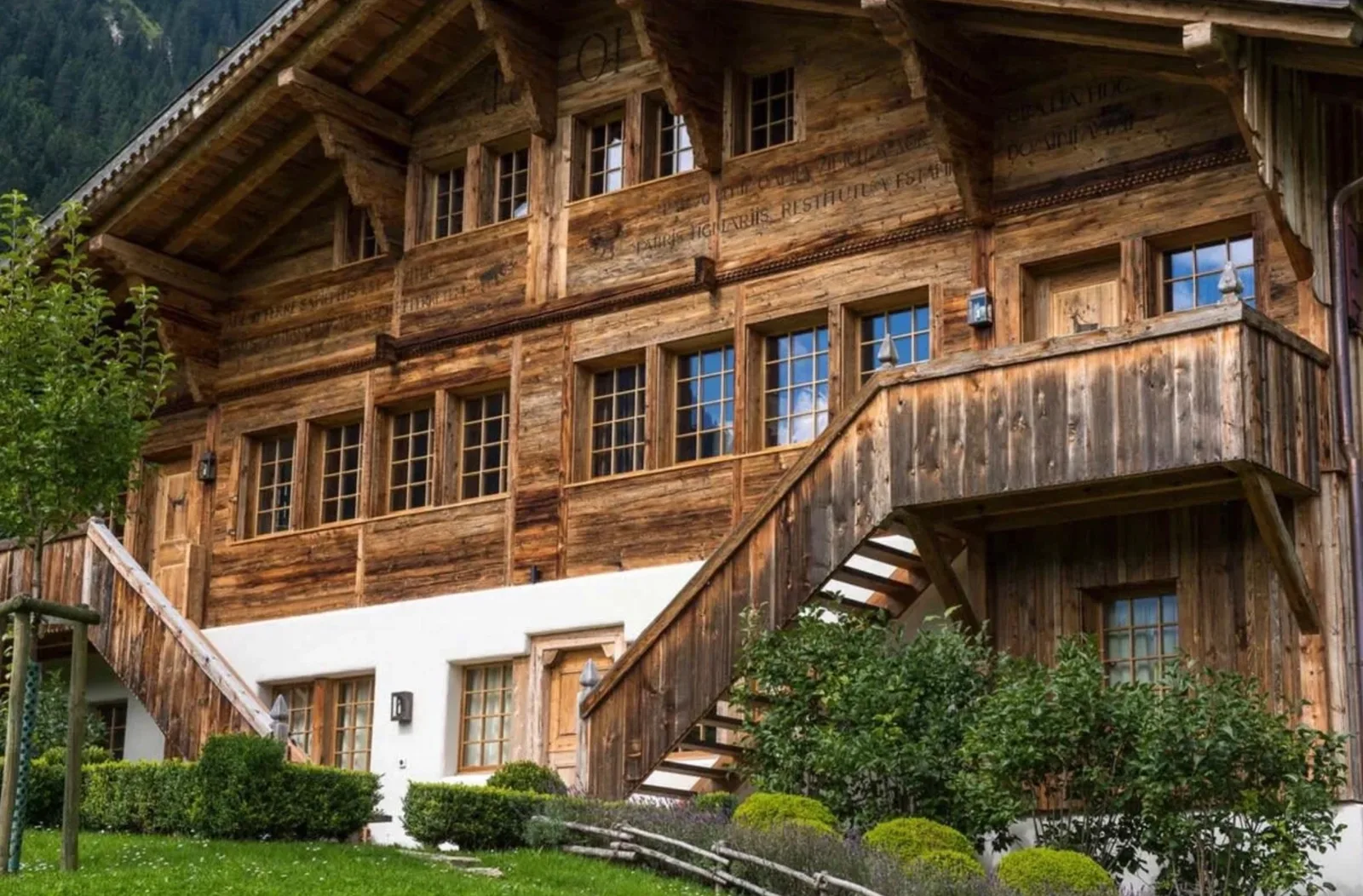
These inscriptions are a kind of signature, and like any signature they reveal character. Some are austere: a name, a date, nothing more. Others are expansive and devout, running the full width of the house. Together they form an archive written in wood, a record of the families who shaped the valley long before the world discovered it.
The Grammar of a Façade
Once you learn to read the inscriptions, the rest of the chalet begins to make sense.
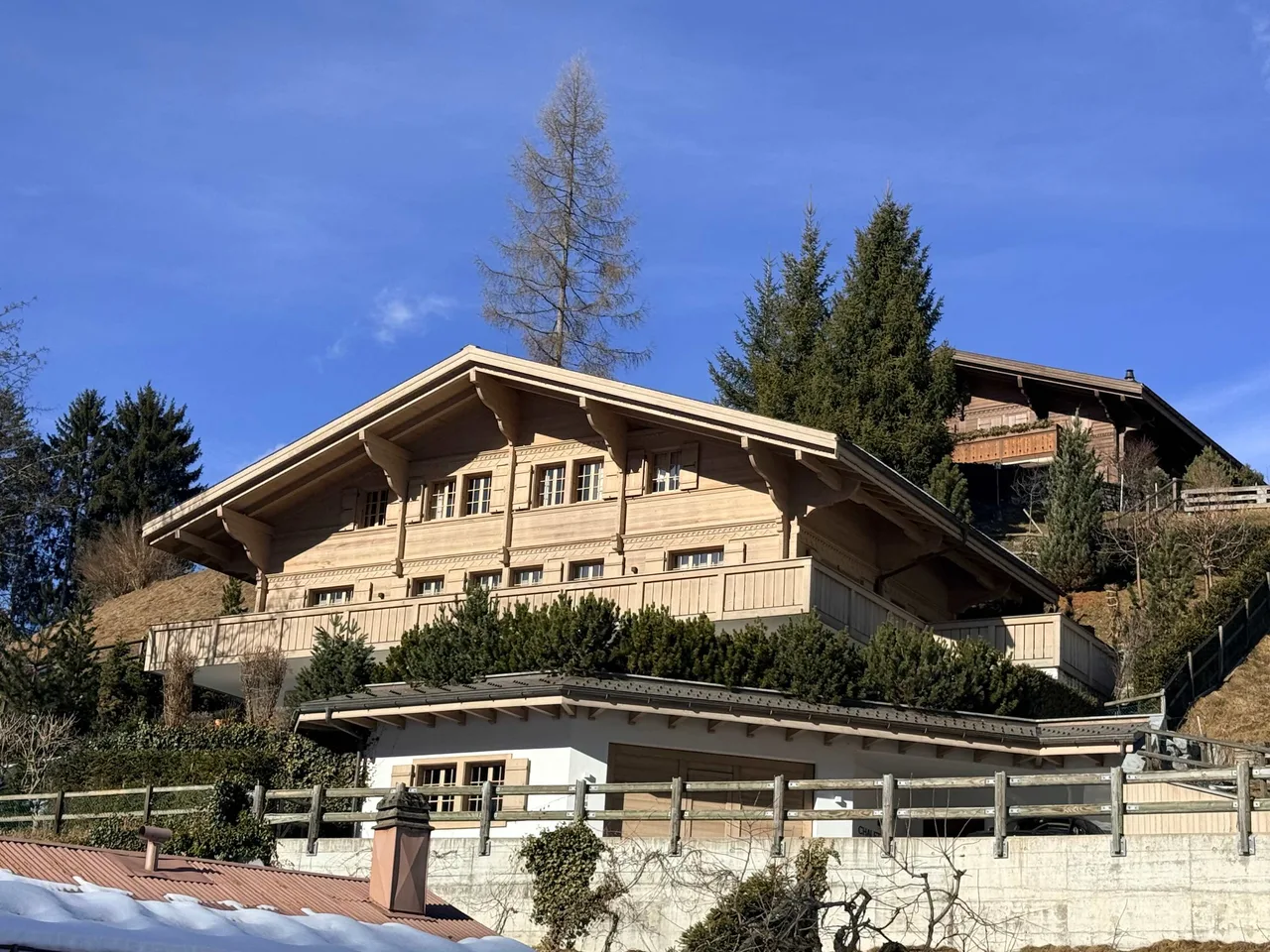
- The gable faces the valley and the sun, because warmth and light were luxuries worth orienting a whole life around.
- The roof is broad and shallow, its eaves reaching far out to shelter the walls and balconies from snow.
- The windows sit in long, disciplined rows, small enough to hold the heat and numerous enough to catch the light.
- The carving runs along the beams in repeating friezes of cubes, twisted ropes and simple geometric bands, each a carpenter’s quiet flourish.
A Complexion Written by the Sun
Look, too, at the colour of the wood. On the south face of an old chalet, generations of sunlight have burnished the timber to a deep chestnut, almost black, while the shaded north side stays pale. A chalet’s age is written not only in its lettering but in its complexion.
The finest example in the region stands at Rossinière. The Grand Chalet, raised in the eighteenth century, is among the largest wooden houses in Switzerland, its façade crowded with windows and carved inscriptions. For the last decades of his life it was home to the painter Balthus, who seems to have understood that such a house is less a residence than a companion.
Why It Matters Now
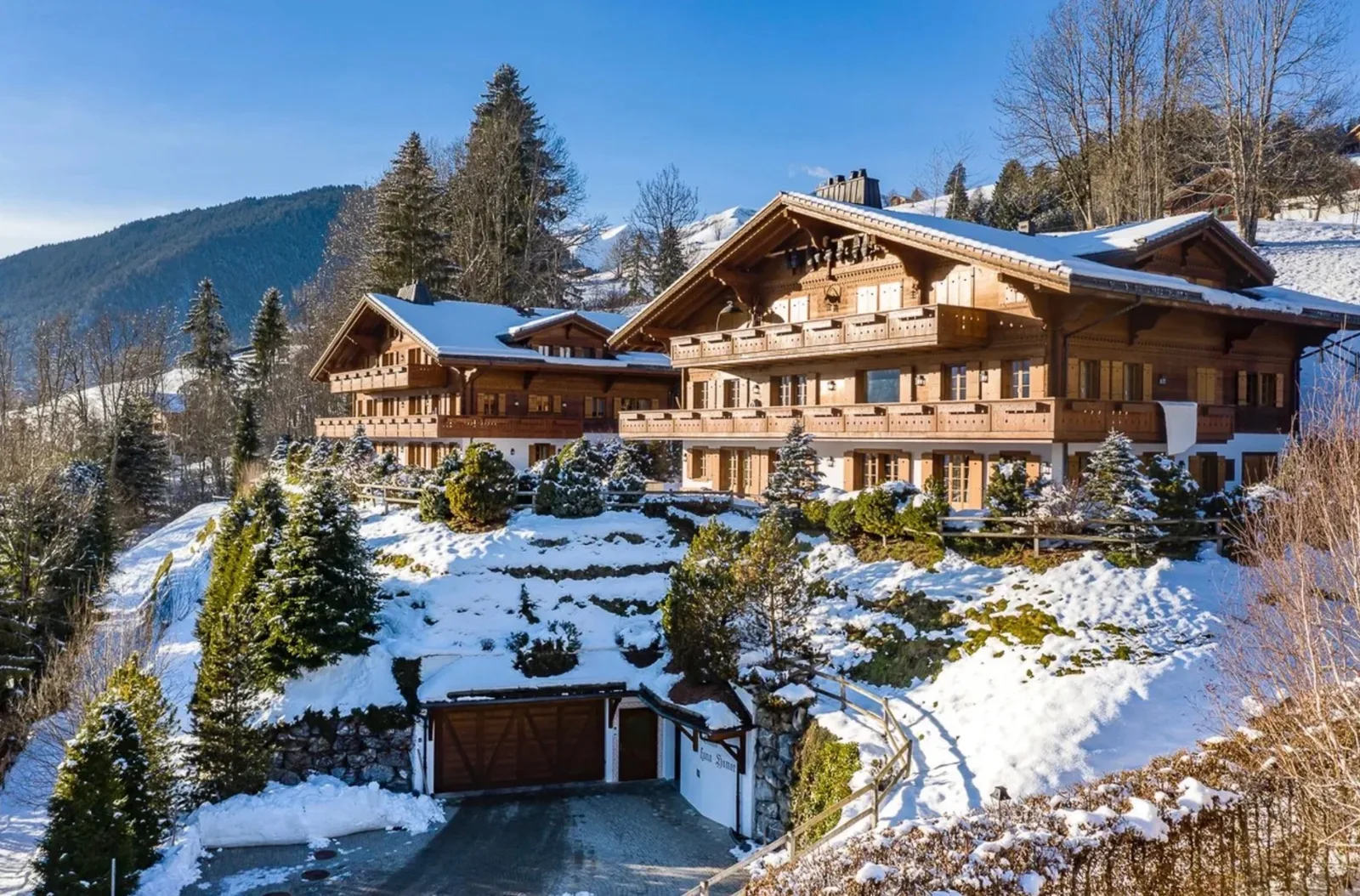
In an age of glass boxes that could stand anywhere in the world, the traditional chalet belongs unmistakably to one place. It was built from the forest behind it, shaped by the snow that falls on it, and signed by the people who lived in it. That rootedness is precisely what makes it precious, and precisely why Gstaad has guarded its architecture so carefully.
To stay in such a house is to become, for a few weeks, part of its story. The fire you light has been lit in the same hearth for generations. The beam above the door carries a blessing written for strangers who would never meet you and yet, in a sense, anticipated your arrival.
Where to Read Them for Yourself
Several homes in the Smiling House collection invite exactly this kind of slow reading.
- Paradise View – 5 BR Gstaad Paradise View Chalet with Outdoor Jacuzzi
- Renovated Chalet on Top of the Picturesque Village
- Gstaad Mountain Chalet With Outdoor Spa
Look Up
So the next time you arrive at a chalet in the Saanenland, pause before you step inside. Look up. The house has been expecting you, and it has something to say.