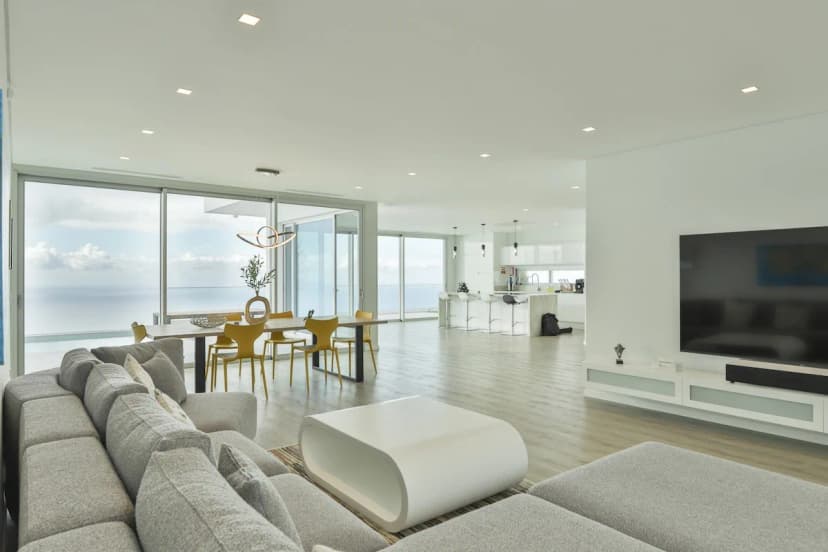
Ocean View Five Bedroom Villa in MadeiraN°001
Madeira, Portugal
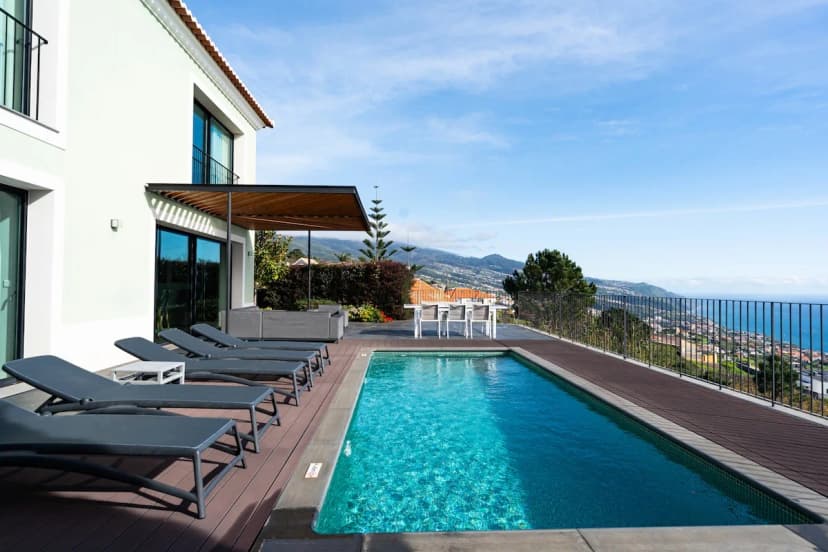
Private poolSea view
Nov 1 – 5 · $1,863 for 4 nights
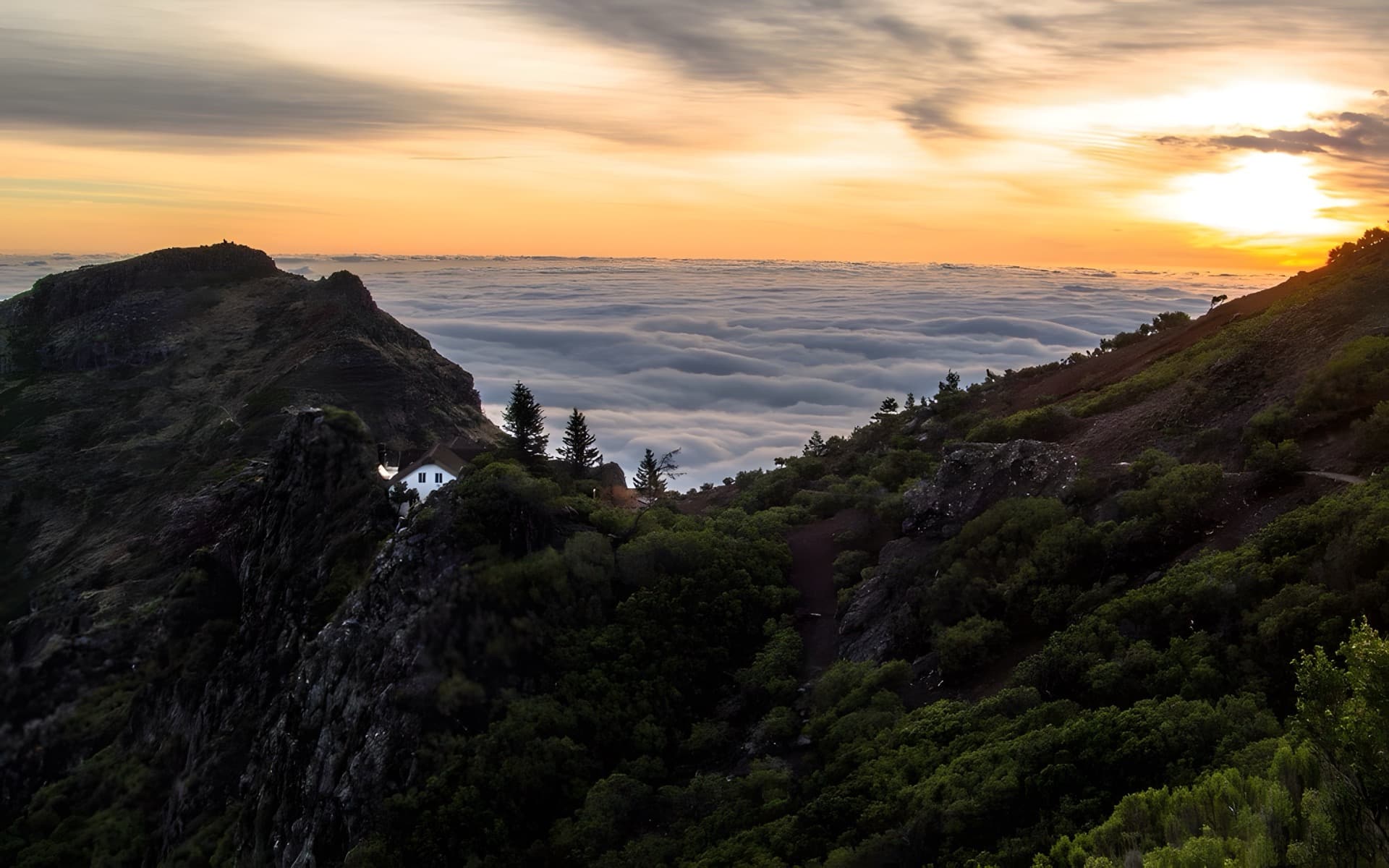
Madeira rises green and vertical from the Atlantic, a Portuguese island of levada trails, ancient laurel forest and cliff-top villages, all wrapped in a famously mild climate. A private villa here means heated pools, banana-garden terraces and ocean views in every direction, with Funchal's restaurants and the mountains equally close.
Updated October 2026
Funchal's amphitheatre bay erupts in one of the world's largest and most celebrated firework displays, best watched from a villa terrace or a boat in the harbour. The island's busiest week, so plan far ahead.
Samba-style parades, costumes and street parties bring a Rio-flavoured week to Funchal's seafront, the liveliest moment of the island winter.
Funchal celebrates spring with flower-carpeted streets, elaborate floral floats and a children's Wall of Hope ceremony, the island's most photogenic festival.
An international pyromusical competition lights up Funchal bay each Saturday evening in June, with synchronised fireworks and music marking the start of summer.
The grape harvest is celebrated with treading demonstrations, folklore and tastings in Funchal and the vineyard village of Estreito de Câmara de Lobos.
The island blooms for the Flower Festival, trails are clear and green, and temperatures sit in the comfortable low twenties.
Warm, dry weather suits lava-pool swims, boat trips and alfresco villa dinners, with the peaks offering cool escapes above the clouds.
Sea temperatures peak, the wine harvest is celebrated, and the trails stay quiet and mild long after mainland Europe has cooled.
Mild, green and uncrowded, with poinsettias in bloom, Christmas lights across Funchal and the bay's world-famous New Year display.
Every home in Madeira that can be booked with Smiling House, as a plain list.
Smiling House also offers a concierge for private chefs, transfers, ski instructors, yachts and cars, a VIP Club with first access to new residences and member rates, chalets for sale in the Gstaad region through its real estate division and instantly bookable homes with live availability.
Madeira packs remarkable variety into a small island. Funchal, the capital, spreads amphitheatre-style around its bay on the sunny south coast, and villas in its hillside suburbs keep restaurants, gardens and the marina within a short drive. East of the city, Machico offers the island's original settlement, a golden beach and quick airport access. Heading west, the banana terraces of Câmara de Lobos and Ribeira Brava give way to the elevated south-west, around Calheta and villages such as Prazeres, where cliff-top villas enjoy the island's longest sunshine hours and biggest ocean views. The wild north coast, greener and more dramatic, suits travellers chasing solitude. Most luxury villas on Madeira come with heated pools, a near-necessity the island does well, and generous terraces. Our concierge arranges hire cars, guides and provisioning wherever on the island you settle.
Madeira is Europe's great walking island. The levadas, irrigation channels cut into the mountainsides centuries ago, carry flat, spectacular trails through the UNESCO-listed laurisilva forest to waterfalls and viewpoints; the ridge walk between Pico do Areeiro and Pico Ruivo is one of the continent's finest. Beyond the trails, ride the cable car from Funchal up to Monte and descend by wicker toboggan, swim in the natural lava pools of Porto Moniz, and stand above the clouds at the Cabo Girão skywalk, one of Europe's highest sea cliffs. Boats run whale- and dolphin-watching trips year-round in the deep water offshore, and canyoning, paragliding and surfing cover the adventurous end. Funchal itself deserves slow days: the Mercado dos Lavradores, the old town's painted doors and some of the Atlantic's loveliest gardens. Your concierge can book guides, boats and private tours.
Madeiran cooking is honest island food elevated by exceptional produce. Espada, the deep-water black scabbardfish, appears grilled with banana; espetada, beef skewered on laurel branches, anchors family feasts; and bolo do caco flatbread with garlic butter starts nearly every meal. Funchal's market overflows with custard apples, passion fruit and mangoes, while poncha, the island's rum, honey and citrus spirit, is mixed with due ceremony in old bars. Madeira wine itself spans bone-dry Sercial to rich Malmsey, best explored at a tasting lodge in Funchal. The restaurant scene has climbed sharply, with Michelin-starred dining in the capital alongside seafront grills in Câmara de Lobos. A villa chef cooking the morning's catch is a highlight worth arranging.
Madeira's subtropical climate keeps the south coast between roughly 17 and 26 degrees all year, which is why it has drawn winter visitors since the nineteenth century. April to June brings flowers, clear mountain trails and the Flower Festival; September and October offer the warmest sea and settled weather. Even midwinter is mild and green, ideal for walking, though showers are more frequent and the north coast wetter. Weather changes with altitude rather than season, so pack layers for the peaks whenever you come. New Year is the island's proudest moment, when Funchal's bay hosts one of the world's great firework displays; book villas far ahead for it.
Madeira International Airport Cristiano Ronaldo (FNC) sits twenty minutes east of Funchal, with direct flights from Lisbon and Porto and a wide network of European routes including London, Zurich, Frankfurt and Paris. The dramatic runway approach along the coast is part of the arrival. On the island, a hire car is strongly recommended: the modern tunnel-and-viaduct road network has cut old journey times dramatically, and the whole island is drivable within a day, though villa driveways can be steep. Porto Santo, the neighbouring beach island, is reachable by ferry or a short flight. The concierge arranges private transfers and drivers on request.