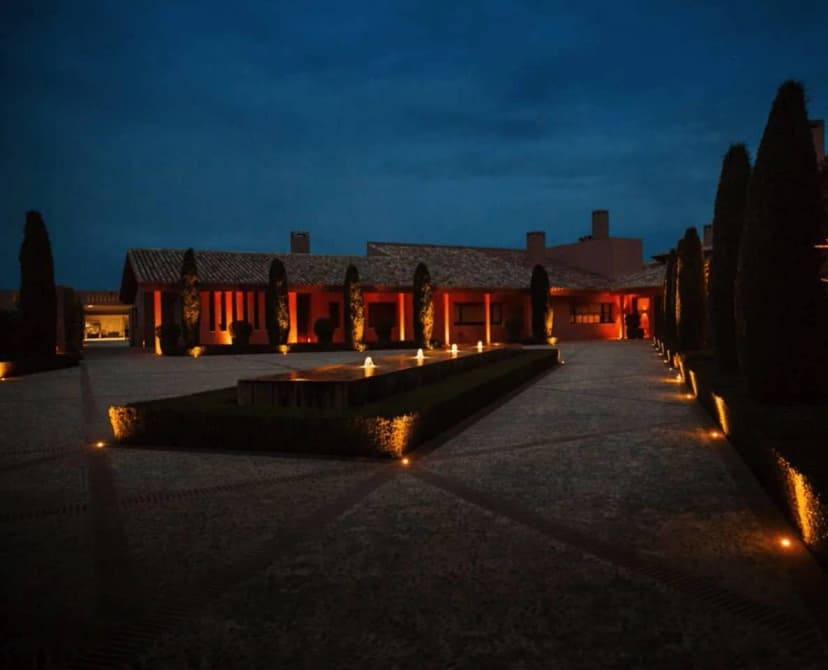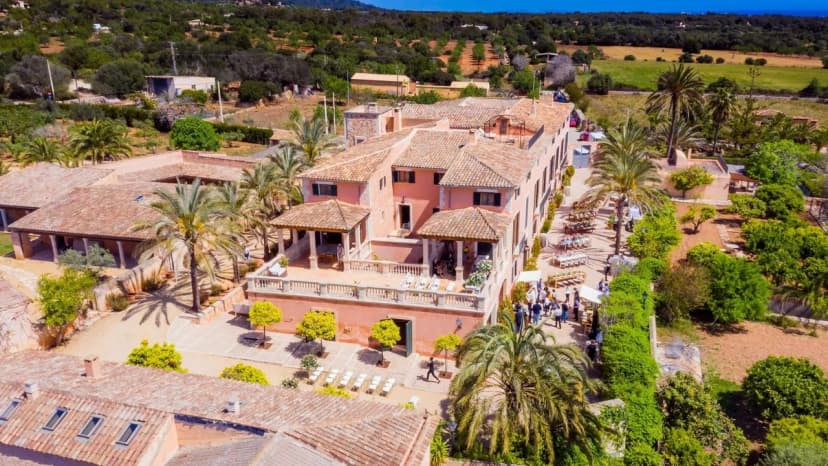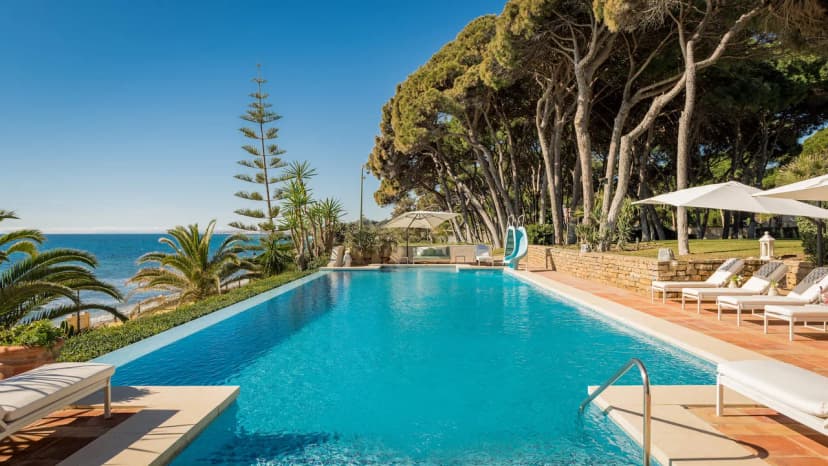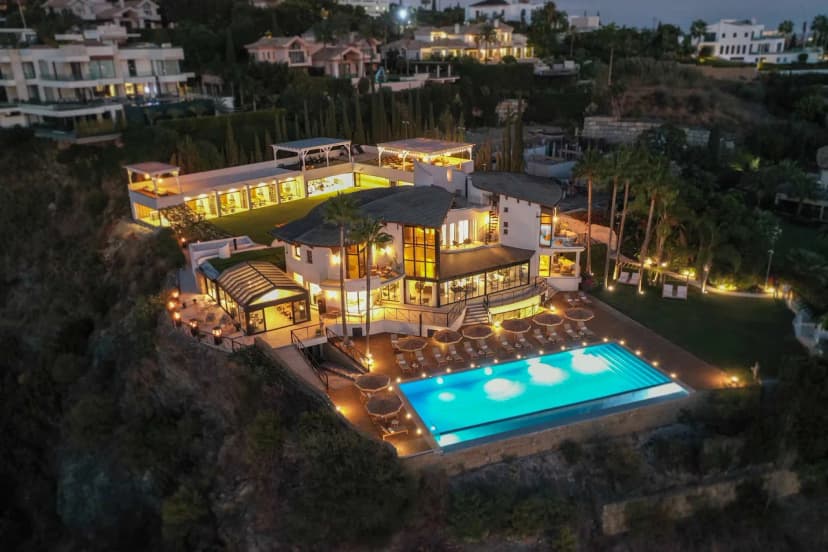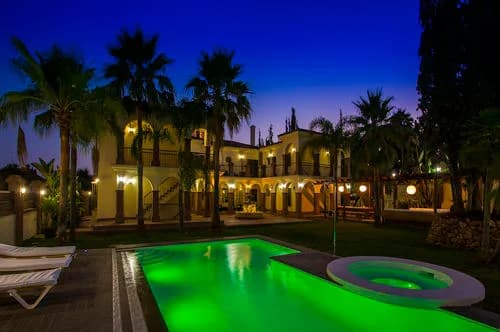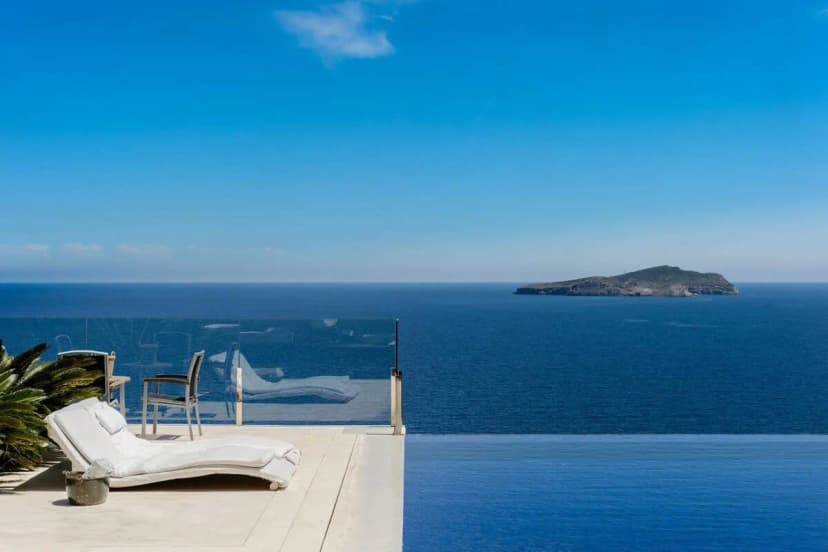
22 BR Super Luxury villa Infinity pool & sea viewsN°001
Ibiza, Spain
Sant Joan de Labritja
Price on request
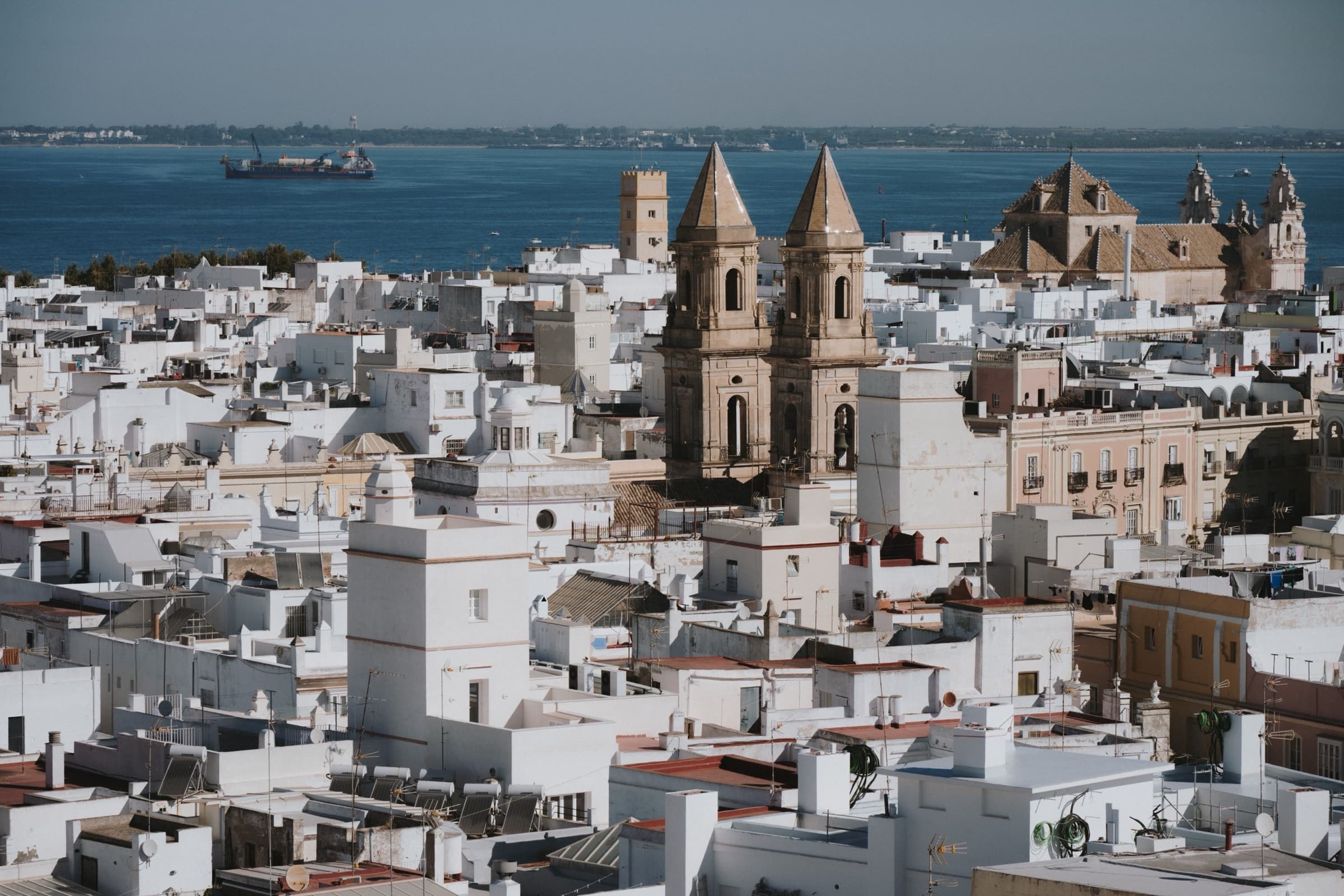 Photo by Alinson Torres
Spain remains Europe's great villa country: thousands of kilometres of Mediterranean coast, the Balearic Islands and a hinterland of orchards, vineyards and white villages. Our collection spans the Costa Blanca around Alicante and mountain-backed Mallorca hamlets such as Biniaraix, all built around private pools, outdoor living and long, sunlit seasons.
Updated October 2026
Valencia's extraordinary fire festival fills the city with towering satirical sculptures, daily firecracker barrages and a final night when the fallas burn. One of Europe's great spectacles, an easy trip from the Costa Blanca.
Seville's spring fair transforms the city with flamenco dresses, horse carriages and all-night casetas. The definitive expression of Andalusian festivity.
Alicante's own great fiesta crowns midsummer with monumental bonfire sculptures, parades and beach celebrations on the night of San Juan. The Costa Blanca's answer to Las Fallas, on your doorstep.
The world-famous tomato battle in Buñol, near Valencia, packs one gleefully chaotic hour into a summer morning. Tickets are limited and it books out early.
Almond and orange blossom, Las Fallas and the Feria de Abril, and ideal temperatures for hiking Mallorca's Tramuntana or cycling the Costa Blanca.
Hot, dry and festive, with warm seas, beach clubs and late dinners outdoors. Alicante's bonfires open the season in June.
The sea holds its summer warmth, crowds fade and vineyards and rice paddies come to harvest. Arguably the finest villa weather of the year.
Bright winter sunshine on the Costa Blanca suits golf and long lunches, while Mallorca's almond blossom arrives as early as late January.
Every home in Spain that can be booked with Smiling House, as a plain list.
Smiling House also offers a concierge for private chefs, transfers, ski instructors, yachts and cars, a VIP Club with first access to new residences and member rates, chalets for sale in the Gstaad region through its real estate division and instantly bookable homes with live availability.
Spain's villa map is wonderfully varied. On the Costa Blanca, Alicante anchors a coast of long beaches and rocky coves, with our villas spread through the sunny Vega Baja towns inland, places such as Almoradi, Catral and Callosa de Segura, where palm groves and orchards meet quiet residential enclaves within easy reach of the sea. The Balearics offer a different register: in Mallorca, the stone hamlet of Biniaraix sits above Soller in the Tramuntana mountains, all citrus terraces and hiking trails, among the island's most coveted addresses. Beyond these, Spain's classic villa regions include Ibiza, the Costa del Sol and Andalusia's white villages. Whichever coast you choose, the formula holds: a private pool, generous terraces and towns where life is lived outdoors.
Days in Spain organise themselves around the sea, the table and the town. On the Costa Blanca, swim from Alicante's beaches, explore the castle of Santa Barbara above the marina, or head inland to the palm forest of Elche, a UNESCO World Heritage Site. Mallorca offers the vintage wooden train from Palma to Soller, hiking the Tramuntana's dry-stone trails from Biniaraix, and swimming coves along the west coast. Golf courses line both coasts, and sailing, diving and cycling are everywhere. City days beckon too: Valencia's City of Arts and Sciences, Palma's cathedral, or a fast train to Madrid. Your concierge can arrange boats, tee times, guides and tastings, turning ideas into effortless days.
Spanish eating is a holiday in itself. The Alicante coast is rice country, home of arroz a banda and proper paella, with just-landed fish, turrón from Jijona and salty local anchovies. Mallorca answers with ensaimadas, sobrasada, Soller oranges and seafront grills, plus a wine scene led by Binissalem's reds. Everywhere, the rituals hold: tapas before lunch, long afternoon meals, markets piled with produce, and dinner late under warm skies. Spain's restaurant culture spans humble beach chiringuitos to some of the world's most decorated kitchens. At your villa, a private chef can lay on a paella by the pool, and the concierge will secure tables worth travelling for.
Spain's Mediterranean coasts enjoy one of Europe's longest seasons. May, June, September and October are the connoisseur's months: seas warm enough to swim, terraces in full use and beaches uncrowded. July and August bring peak heat and the liveliest resort atmosphere, ideal for committed sun-seekers, though villas book far ahead. Winter is remarkably gentle on the Costa Blanca, with bright days in the high teens that suit golf, cycling and long lunches, while Mallorca's almond blossom lights up February. Festival timing matters too: Las Fallas fills Valencia in March, and Alicante's bonfires crown midsummer in June. There is, in truth, no bad month.
Spain is one of Europe's easiest destinations to reach. Alicante-Elche Airport (ALC) serves the Costa Blanca with dense year-round connections across Europe, and Palma de Mallorca (PMI) is among the continent's busiest holiday gateways. Madrid (MAD), Barcelona (BCN) and Malaga (AGP) open up the rest of the country, linked by Spain's excellent high-speed rail network. Transfer times are short: most Costa Blanca villas are within forty five minutes of Alicante, and Mallorca's south and west coasts are similar from Palma. A hire car gives the most freedom, and the concierge can arrange private transfers and drivers.