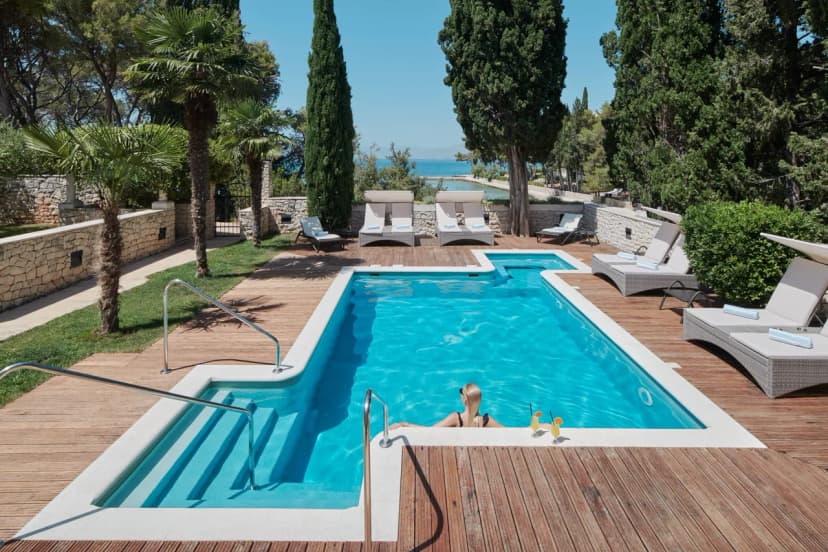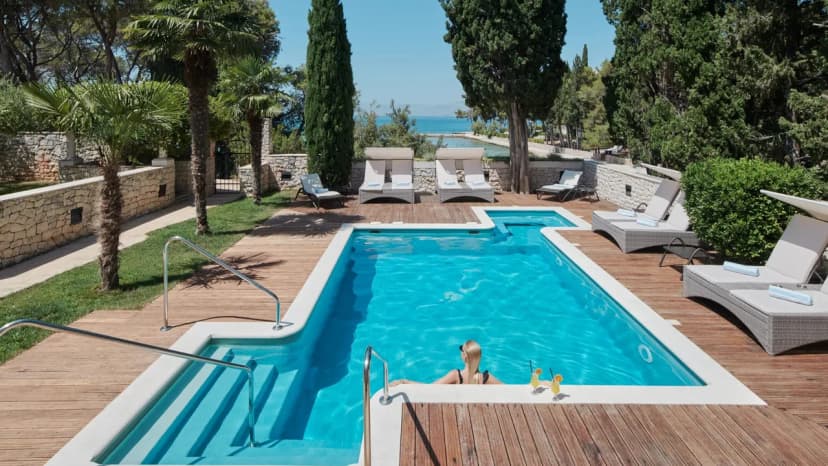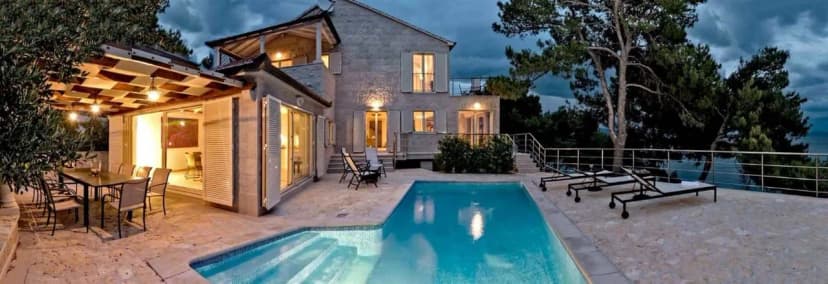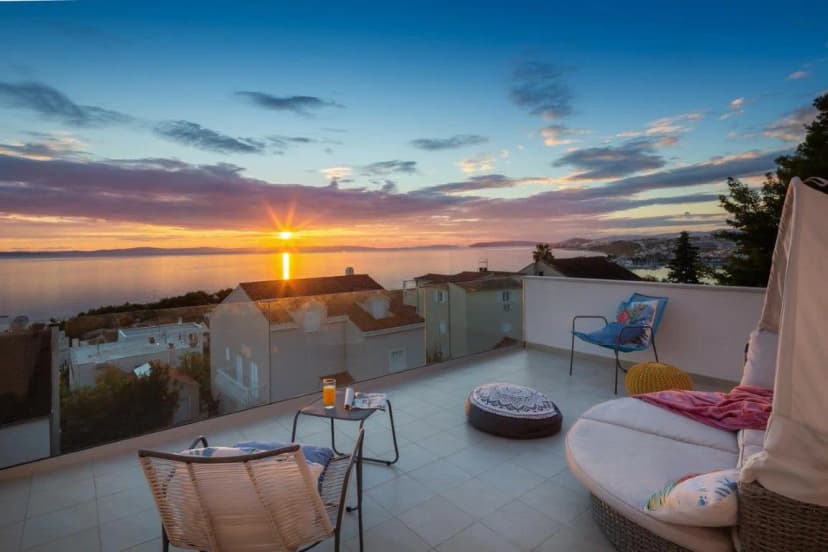
Glorious Spacious Villa Close to Surrounding BeachesN°001
Split Riviera, Croatia
Podstrana
Private poolSea view
Oct 20 – 23 · $4,693 for 3 nights
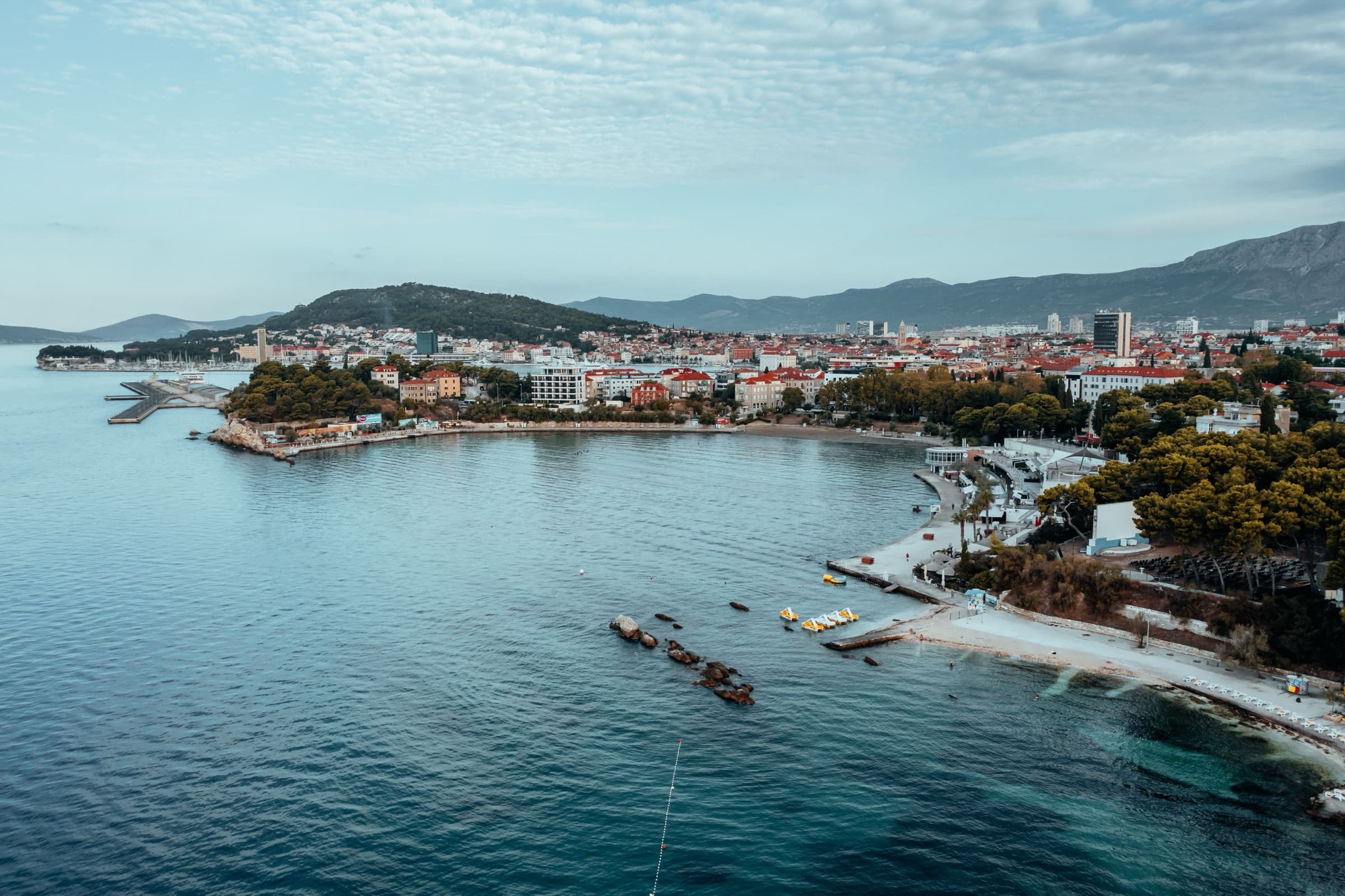
The Split Riviera is the stretch of central Dalmatian coastline around the historic port city of Split, lined with pine-clad bays, stone villages and island views. Renting a luxury villa here pairs a private pool and sea outlook with easy access to Diocletian's Palace, beaches and the nearby islands.
Updated September 2026
Split honours its patron saint with processions, concerts and stalls around Diocletian's Palace, the city's most heartfelt local celebration.
Opera, theatre and dance staged in the courtyards of Diocletian's Palace and other open-air venues, with the Peristyle as an unforgettable backdrop.
One of the world's biggest electronic music festivals lands in Split each July, drawing tens of thousands before its afterparties move out to the islands.
Split turns back the clock with Roman costumes, legionaries and an emperor's procession through the palace, a playful close to high summer.
Mild sailing weather, quiet palace streets and hiking on Marjan hill and the Biokovo slopes. Villa terraces come into their own by May.
Boat days to Brač, Hvar and Šolta, beach clubs along the riviera and festivals inside a Roman palace. A private pool villa keeps the pace civilised.
The Adriatic stays warm into October while konobas serve the olive and grape harvest. Sailing and sightseeing are at their most relaxed.
Split's Advent fills the old town with lights and pop-up stalls, and Diocletian's Palace can be wandered in near solitude. Ideal for an off-season cultural break.
Smiling House also offers a concierge for private chefs, transfers, ski instructors, yachts and cars, a VIP Club with first access to new residences and member rates, chalets for sale in the Gstaad region through its real estate division and instantly bookable homes with live availability.
The Split Riviera follows the central Dalmatian coast around Split, Croatia's second city and the cultural anchor of the region. The shoreline curves through wooded headlands, sheltered bays and seaside towns such as Trogir to the west and Omis to the east, where the Cetina river meets the sea. Behind the coast rise the limestone slopes of Mosor and Kozjak, while the islands of Brac, Solta and Hvar sit just offshore. It is a landscape of Mediterranean pine, vineyards and pale stone, where Roman heritage, working fishing harbours and modern marinas coexist. Luxury villas in Split Riviera tend to occupy elevated plots and quiet coastal villages, offering privacy within easy reach of the city.
Choices range from villas perched above the coast with panoramic Adriatic views to retreats tucked into stone villages and pine groves. The areas around Trogir and Ciovo suit those wanting a UNESCO old town and beaches close by, while Omis and the Cetina valley appeal to active travellers. Inland Dalmatia, towards the Imotski region, offers larger estates with greater seclusion and quieter surroundings. Families often favour gently sloping bays with calm swimming, while groups gravitate to spacious villas with generous pool terraces and outdoor dining. A curated collection of luxury villas spans the riviera, most with private pools, landscaped gardens and sea or island outlooks.
Begin in Split itself, wandering the living Roman quarter of Diocletian's Palace, climbing the cathedral bell tower and walking the Riva waterfront. The Marjan peninsula offers shaded trails and the swimming coves of Kasjuni and Bene. From the ferry port, day trips reach Brac and its Zlatni Rat beach, chic Hvar and quiet Solta. Closer to home, Trogir's medieval centre and Omis with its river canyon, rafting and zip-lining round out the options. Vineyards and konobas in the hinterland, plus Krka and the Cetina waterfalls, give easy excursions inland. Sailing and private boat charters are among the most rewarding ways to explore the Adriatic.
Dalmatian cooking centres on the sea and the garden: grilled fish, black risotto, octopus slow-cooked under a peka bell, prsut ham, sheep's cheese and local olive oil. Split's old town and Varos quarter hold both refined restaurants and traditional konobas, paired with regional wines such as Posip and Plavac Mali. The Riva and Bacvice areas carry the city's evening energy, with waterfront bars and seasonal beach clubs, while villages along the coast keep things relaxed and family-run. Many villas are well suited to private chefs and in-villa dining, and Smiling House concierge can arrange tables, provisioning and tastings on request.
The season runs from late spring to early autumn. June and September offer warm seas, long days and lighter crowds, making them ideal for villa stays and sightseeing in comfort. July and August bring the hottest weather, busiest beaches and a lively festival calendar, including Split's summer events. May and October are quieter and cooler, good for walking, culture and the coast without the peak rush. Winters are mild but many seaside venues and ferries scale back. For the best balance of sea temperature, atmosphere and availability, the shoulder months are hard to beat.
Split Airport (SPU) at Kastela handles direct flights from across Europe in season and sits roughly 25 km from the city, close to Trogir and the western riviera. Split's port is among the busiest in the Adriatic, with frequent ferries and catamarans to Brac, Hvar, Solta and beyond. The A1 motorway links the region to Zagreb and the wider network, and the city is a stop on coastal road and rail routes. A hire car is useful for reaching hillside villas and quieter coves, and Smiling House concierge can arrange private transfers from the airport or port.