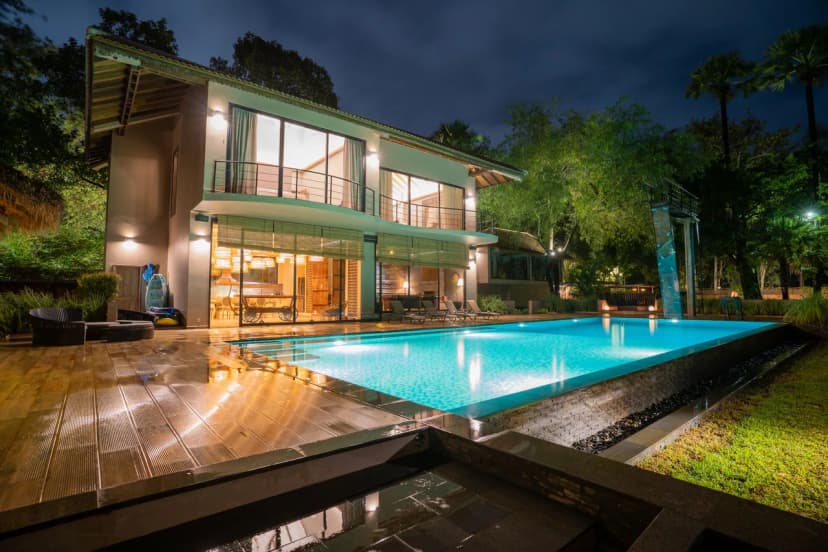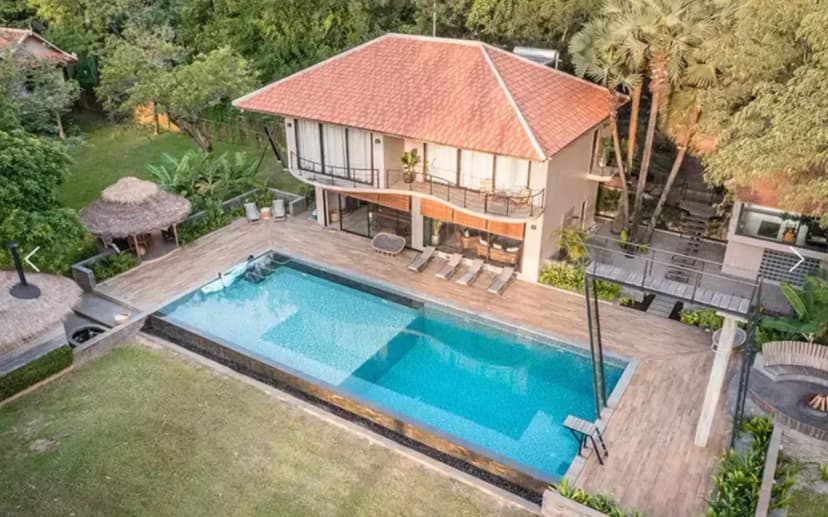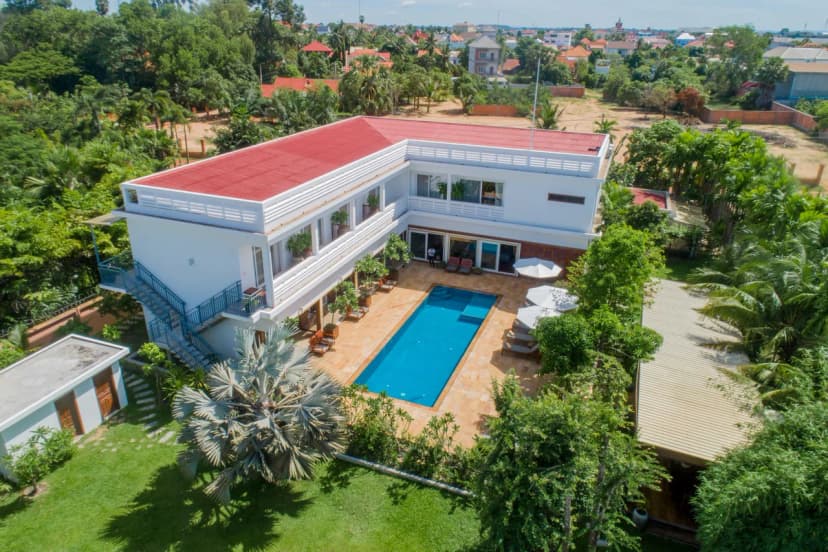
Colonial Style Grand Villa In Lush Tropical GardenN°001
Siem Reap, Cambodia
Krong Siem Reap
Private poolGardenAir conditioning
Oct 19 – 22 · $4,770 for 3 nights
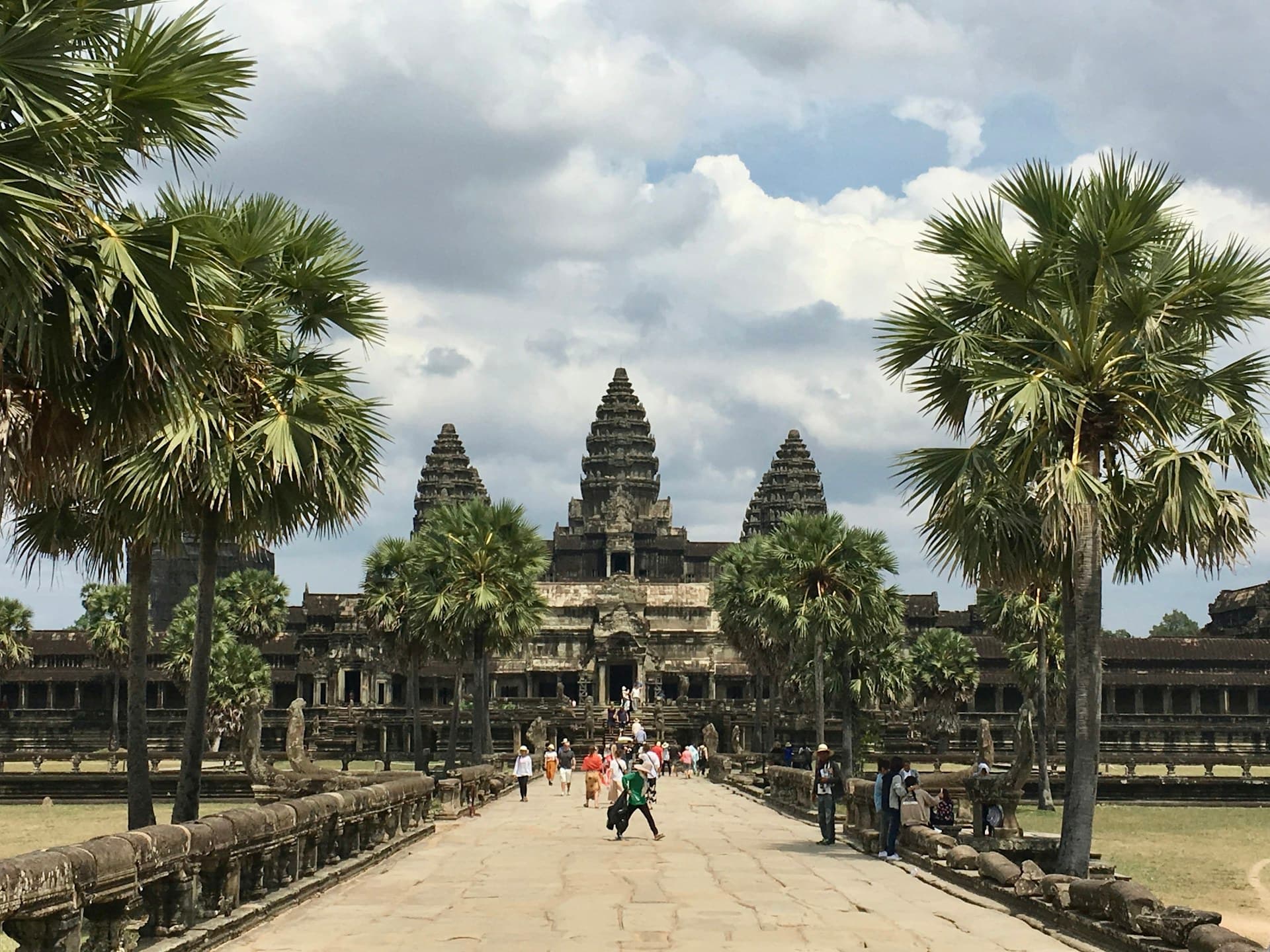 Photo by Jo Barnes on Unsplash
Cambodia rewards the unhurried traveller: the temple city of Angkor at Siem Reap, the vast seasonal lake of Tonle Sap, riverside Phnom Penh and a slow, palm-fringed southern coast. A private pool villa in Siem Reap pairs dawn temple visits with shaded afternoons by the water, supported by staff and concierge care that make Khmer hospitality feel effortless.
Updated October 2026
Held at the November full moon to mark the reversal of the Tonle Sap river, with spectacular longboat races and illuminated flotillas, grandest in Phnom Penh.
Runners loop past Angkor's temples on closed roads in one of Asia's most scenic race settings, held annually since 1996.
Cambodia's biggest holiday brings three days of temple visits, family gatherings, water games and street celebrations, with Siem Reap especially festive.
A fifteen-day ancestral festival culminating in nationwide pagoda ceremonies, when Cambodians honour their forebears; a quiet, atmospheric time to experience Khmer spiritual life.
Warm days, low humidity and clear skies make this the classic window for Angkor, opening with the Water Festival's longboat races.
Temperatures climb and the country celebrates its New Year in mid-April; early temple starts and shaded villa pools set the rhythm.
Short afternoon rains turn the countryside vivid green, fill the Angkor moats and thin the crowds at the great sites.
The great lake swells to its fullest, floating villages come alive, and Pchum Ben fills the pagodas with candlelight and offerings.
Every home in Cambodia that can be booked with Smiling House, as a plain list.
Smiling House also offers a concierge for private chefs, transfers, ski instructors, yachts and cars, a VIP Club with first access to new residences and member rates, chalets for sale in the Gstaad region through its real estate division and instantly bookable homes with live availability.
Siem Reap is the natural base for a Cambodian villa holiday. The town sits just south of the Angkor Archaeological Park, so the great temples are a short drive from your gate, yet its leafy lanes hold refined restaurants, galleries, spas and a lively old market quarter. Villas here typically come with walled gardens, private pools and household staff, a genuine sanctuary after a hot morning among the ruins. Phnom Penh, the capital, deserves a night or two for the Royal Palace, the riverside and its emerging dining scene. To the south, Kampot's river valley and pepper farms, seaside Kep and the islands off Sihanoukville offer a barefoot coastal coda. Most guests anchor in Siem Reap and let the concierge arrange the rest.
The temples come first. Watch dawn break behind Angkor Wat's towers, trace the enigmatic faces of the Bayon at Angkor Thom, and wander Ta Prohm, where strangler figs grip the stones. Quieter outliers such as Banteay Srei, with its intricate pink sandstone carving, reward a longer drive. A private guide, arranged through the concierge, transforms the experience and helps you dodge the crowds. Beyond the park, glide through the floating and stilted villages of Tonle Sap, cycle the countryside past rice paddies and sugar palms, or take a Khmer cooking class in Siem Reap. Phnom Penh adds the Royal Palace, the Silver Pagoda and the National Museum, along with sobering but important histories at Tuol Sleng and Choeung Ek.
Khmer cuisine is subtle, aromatic and underrated. The national dish, fish amok, arrives as a delicate coconut curry steamed in banana leaf, while beef lok lak, green mango salads and noodle soups fill out the repertoire. Kampot pepper, grown in the south and protected by its own geographical indication, is prized by chefs worldwide and appears everywhere from street stalls to tasting menus. Siem Reap has grown into a genuinely good dining town, mixing refined Khmer kitchens with French-influenced tables, a legacy of the colonial era. Markets brim with tropical fruit, and your villa staff or a private chef can turn the morning's haul into lunch by the pool.
Cambodia's dry season runs from November to April. November to February is the sweet spot: warm, dry days and comfortable evenings, ideal for long mornings among the temples. March and April turn hot, when a villa pool earns its keep and Khmer New Year fills the streets in mid-April. The green season, from May to October, brings afternoon downpours that rinse the landscape into vivid greens, fill the Angkor moats and swell Tonle Sap; visitor numbers drop and the light turns photogenic. Whichever season you choose, plan temple visits for early morning and late afternoon, with poolside hours in between.
Siem Reap–Angkor International Airport (SAI) connects the temple town with hubs across Asia, including Bangkok, Singapore, Ho Chi Minh City and Kuala Lumpur, so most European and American travellers arrive with one smooth connection. Phnom Penh International (PNH) serves the capital and the south. Visas are straightforward for most nationalities, available electronically or on arrival, though requirements should be checked before travel. Within Cambodia, private drivers are inexpensive and the standard way to move around; the road between Siem Reap and Phnom Penh takes around five to six hours, while short domestic flights link the two. Your concierge arranges airport transfers, drivers and guides throughout.