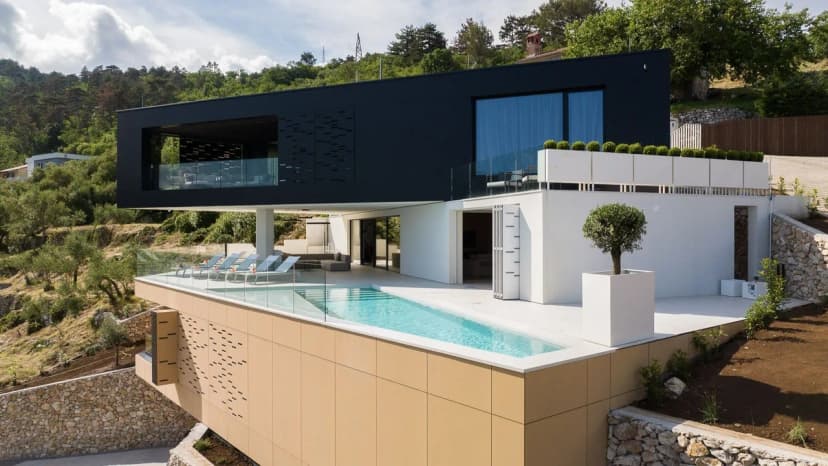
Hilltop Oasis with Designer InteriorsN°001
Opatija Riviera, Croatia
Moscenice
Private poolSea viewSpa
Nov 9 – 16 · $7,608 for 7 nights
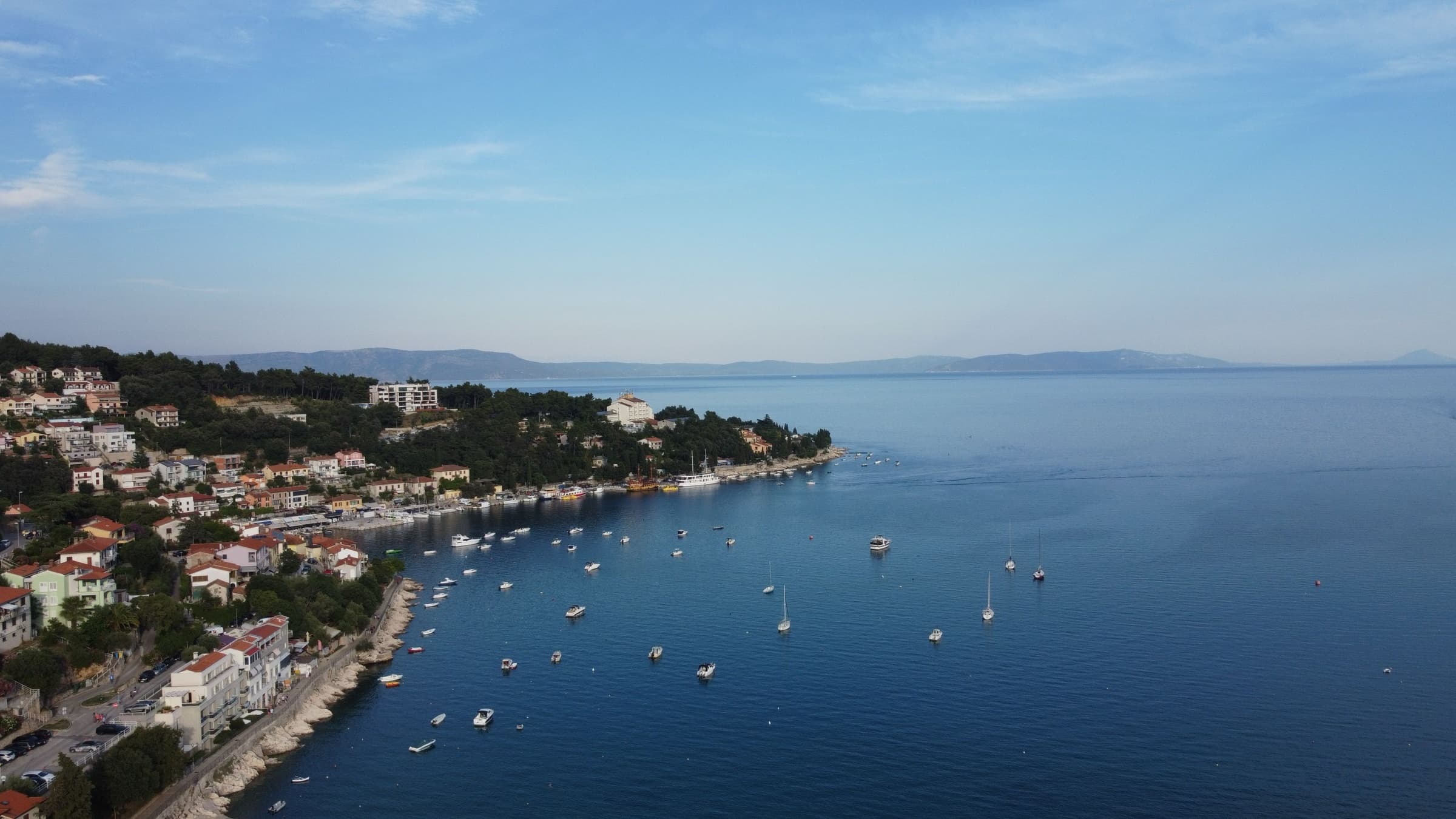 Photo by Nathanael Schmer
The Opatija Riviera curves along Croatia's Kvarner Gulf, a string of Habsburg-era resort towns, pebble coves and seafront promenades sheltered by Mount Učka. Once the winter retreat of Viennese society, it now suits villa travellers who want elegant coastal living, warm seas and easy drives to Istria and the islands.
Updated October 2026
Lovran's famous marroni chestnuts star in sweet and savoury menus, street stalls and village festivities across three autumn weekends, the riviera's best-loved food festival.
One of Europe's largest carnivals takes over neighbouring Rijeka with weeks of masked balls and the great International Carnival Parade, a spectacle of bell-ringers, floats and costumed groups from across the region.
Lovran celebrates the Kvarner spring delicacy with restaurant menus and a festival built around wild asparagus, including a giant communal fritaja omelette.
International jazz acts play open-air stages and historic venues around Opatija over a summer weekend, a fixture of the riviera's cultural calendar.
Opatija's gardens flower early, wild asparagus fills Lovran's menus and the Lungomare is at its most peaceful for walkers.
Pebble beaches and lidos come alive, jazz and concerts fill Opatija's stages, and boats run to Krk, Cres and Lošinj.
The Marunada festival celebrates Lovran's chestnuts while Učka's forests turn colour, ideal hiking weather with the coast to yourself.
The sheltered climate that made Opatija a Habsburg winter resort keeps seafront walks pleasant, with Rijeka's carnival building through February.
Every home in Opatija Riviera that can be booked with Smiling House, as a plain list.
Smiling House also offers a concierge for private chefs, transfers, ski instructors, yachts and cars, a VIP Club with first access to new residences and member rates, chalets for sale in the Gstaad region through its real estate division and instantly bookable homes with live availability.
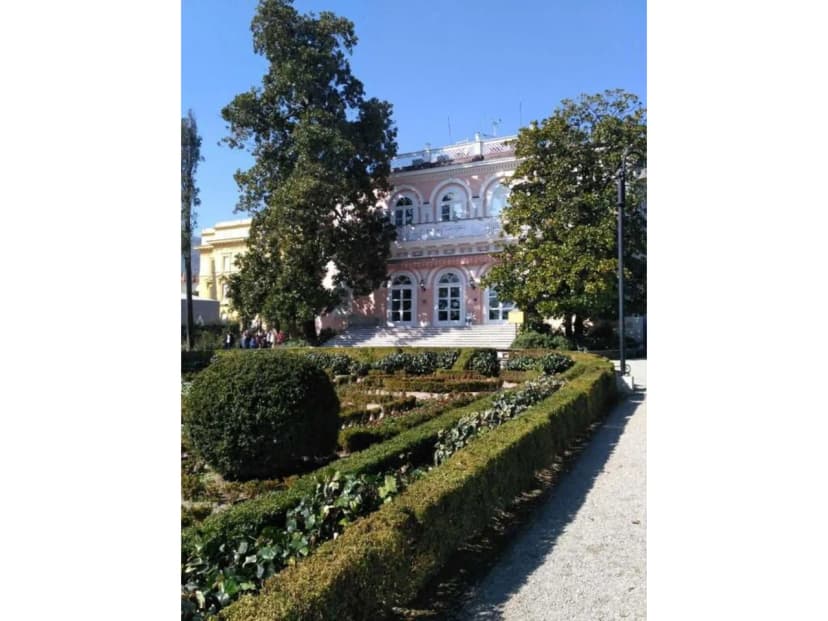
The riviera runs along the western shore of the Kvarner Gulf, where Mount Učka drops steeply to the sea and shelters the coast from harsher weather, the microclimate that first drew Austro-Hungarian society here in the nineteenth century. Opatija itself is the grande dame, all wedding-cake villas, camellia gardens and seafront cafés. A few kilometres south, Lovran keeps a walled medieval core above its harbour, followed by the pebble beach of Medveja and the tiny hilltop town of Mošćenice with its cobbled lanes and gulf views. Around the bay towards Crikvenica, quieter villages such as Bakarac and the hillside hamlets of the Vinodol valley, Grižane among them, offer rural seclusion within reach of the water. Villas here range from restored Belle Époque houses to contemporary hillside homes with infinity pools, and our concierge arranges boats, transfers and reservations along the coast.
Start with the Lungomare, the celebrated coastal promenade that threads between Volosko and Lovran past harbours, bathing spots and grand villas; walking a stretch before breakfast is a riviera ritual. Swim from pebble beaches at Medveja and Ičići or from the rocky lidos below the promenade. Behind the coast, Učka Nature Park offers marked trails to the Vojak summit, where the view sweeps across the Kvarner islands to Istria, plus paragliding and mountain-biking routes. Day trips are this riviera's quiet superpower: the island of Krk over its bridge, ferries towards Cres and Lošinj, the Habsburg port bustle of Rijeka, and Istria's hill towns and truffle country within an hour's drive. Opatija adds gardens, the Maiden with the Seagull statue and open-air summer concerts. Your concierge can organise boat charters, island excursions and guided hikes.
Kvarner cooking is defined by what the gulf provides, above all the prized Kvarner scampi, sweeter and more delicate than their Adriatic cousins, served raw, grilled or in a rich buzara sauce. Volosko, the fishing village at Opatija's northern edge, has grown into one of Croatia's most respected dining addresses, its konobas and refined restaurants set steps from the moorings. Spring brings wild asparagus, autumn the sweet chestnuts of Lovran, both celebrated with local festivals, and the hinterland supplies lamb, cheeses and honey. Istrian influence adds truffles, olive oils and malvazija whites from just over the mountain. Seafront dining rooms in Opatija carry the riviera's old-world polish, while a villa chef turning the morning's catch into dinner is easily arranged.
The riviera's sheltered position gives it a long, gentle season. June to September is prime swimming weather, with the sea at its warmest in August and the promenade towns at their liveliest; even then, crowds stay lighter than in Dubrovnik or Hvar. May and October are quietly excellent, warm enough for terrace lunches and hiking on Učka, with the coast largely to yourself. Spring's asparagus season and October's chestnut festival in Lovran give food lovers reasons to travel off-peak. Winters are mild by continental standards, the season Opatija was originally built for, though many seasonal restaurants close. For a classic villa holiday with swimming, aim for June, early July or September.
Rijeka Airport (RJK), on the island of Krk about forty minutes away, is the closest gateway, with seasonal European routes. Pula (PUY) and Trieste (TRS) in Italy are each around an hour to ninety minutes by road, and Zagreb (ZAG) roughly two hours by motorway, together giving flexible year-round options. Zagreb and Ljubljana are both realistic arrival cities for a scenic drive down. A car is worthwhile for exploring Istria, the Vinodol valley and the islands, though within Opatija and Lovran the Lungomare and local taxis cover daily life. The concierge arranges private transfers from any of the airports.